Shakespeare sonnets summary and analysis pdf
Shakespeare wrote sonnets published in his ‘quarto’ in , covering themes such as the passage of time, mortality, love, beauty, infidelity, and jealousy. The first of Shakespeare’s sonnets are addressed to a young man, and the last 28 addressed to a woman – a mysterious ‘dark lady’.
Shakespeare sonnets pdf
William Shakespeare's poetry is an enduring testament to the power of language and the human experience. His works, including 'Sonnet 18,' are renowned for their poetic beauty, philosophical depth, and emotional resonance. Shakespeare's sonnets full text
Shakespeare’s occasional poems are unquestionably minor, interesting primarily because he wrote them; his sonnets, on the other hand, constitute perhaps the language’s greatest collection of lyrics. They are love lyrics, and clearly grow from the social, erotic, and literary contexts of his age. Shakespeare wrote 154 sonnets published in his 'quarto' in 1609, covering themes such as the passage of time, mortality, love, beauty, infidelity, and jealousy. But the identity of the “begetter” of the sonnets, “Mr W. H.” remains a mystery. Some think this is a misprint for “Mr W. S.” or “Mr W. Sh.”, as in William Shakespeare. Others suspect that the “begetter” refers to the scoundrel who may have conveyed the poems to Thorpe against Shakespeare’s wishes.
Through a blend of intricate language, vivid imagery, and rhythmic variation, his sonnets and poems delve into the complexities of life and relationships. William Shakespeare is an important English writer known for his deep understanding of human feelings and relationships. His poetry, including 'Sonnet 152,' captures complex emotions like love and betrayal. In this sonnet, the speaker shows his struggles in a challenging relationship with the Dark Lady.
15+ Must-Read William Shakespeare Poems - Poem Analysis Home › Literature › Analysis of William Shakespeare’s Poems. Analysis of William Shakespeare’s Poems By NASRULLAH MAMBROL on July 17, 2020 • (0). One of William Shakespeare’s (bapt. 26 April 1564 – 23 April 1616) great advantages as a writer was that, as a dramatist working in the public theater, he was afforded a degree of autonomy from the cultural dominance of the court, his.Sonnet 18 by William Shakespeare - Poem Analysis About William Green Will created Poem Analysis back in 2015 and has a team of the best poetry experts helping him analyze poems from the past and present. Although he has a background in Automotive Engineering, having worked for McLaren testing supercars, Will has a keen eye for poetry and literature.A Fairy Song by William Shakespeare - Poem Analysis William Shakespeare (1849) by Samuel Cousins; Samuel Cousins, CC0, via Wikimedia Commons. Famous Poems by William Shakespeare. Although most renowned for his plays, William Shakespeare’s poetry has become household and even school curriculum favorites. 154 sonnets of shakespeare pdf
William Shakespeare’s sonnets, published in , represent one of the most celebrated collections of poetry in the English language. Consisting of sonnets, these poems explore themes of love, beauty, time, mortality, and the complexities of human relationships. 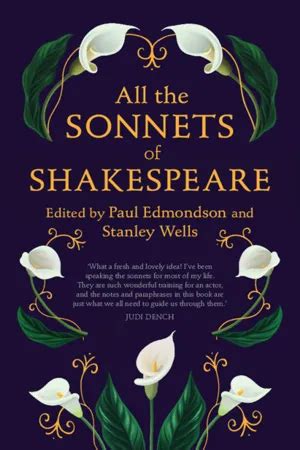
2 poems of william shakespeare
Summary ‘Sonnet 25’ by William Shakespeare is a clever love poem that compares the speaker’s permanent love to fleeting moments of fame. The speaker addresses the Fair Youth telling him that the love they have is far more important than who the stars or sun are shining on at any one time. William shakespeare famous poems
Summary ‘Sonnet 75’ by William Shakespeare is a sonnet that depicts the speaker’s uncontrollable obsession with the Fair Youth. Throughout this poem, the speaker describes to the youth how he sees their relationship.
Shakespeare sonnets summary
Summary ‘Sonnet ’ by William Shakespeare asks the Fair Youth to consider the speaker’s mistakes while also understanding why he made them. The speaker spends the first twelve lines of the sonnet going through and cataloging all the things he’s recently done wrong. Famous shakespeare sonnets
Read Sonnet 11, also known as 'As fast as thou shalt wane, so fast thou grow’st,' with a deep dive analysis into the poem.